

Spanish Immersion Programs & Curriculum in Miami
In Miami, Spanish is not confined to a classroom or a cultural district. It is used throughout daily life—in restaurants, shops, healthcare, media, government, family relationships and international business.
The city brings together speakers with roots in Cuba, Colombia, Venezuela, Puerto Rico, the Dominican Republic, Mexico, Central America, South America and Spain. This makes Miami particularly valuable for adults who want to understand Spanish across different accents and cultures.
Your private program turns that multilingual environment into a focused learning experience without requiring US-based participants to travel internationally. Miami programs are arranged privately according to availability.
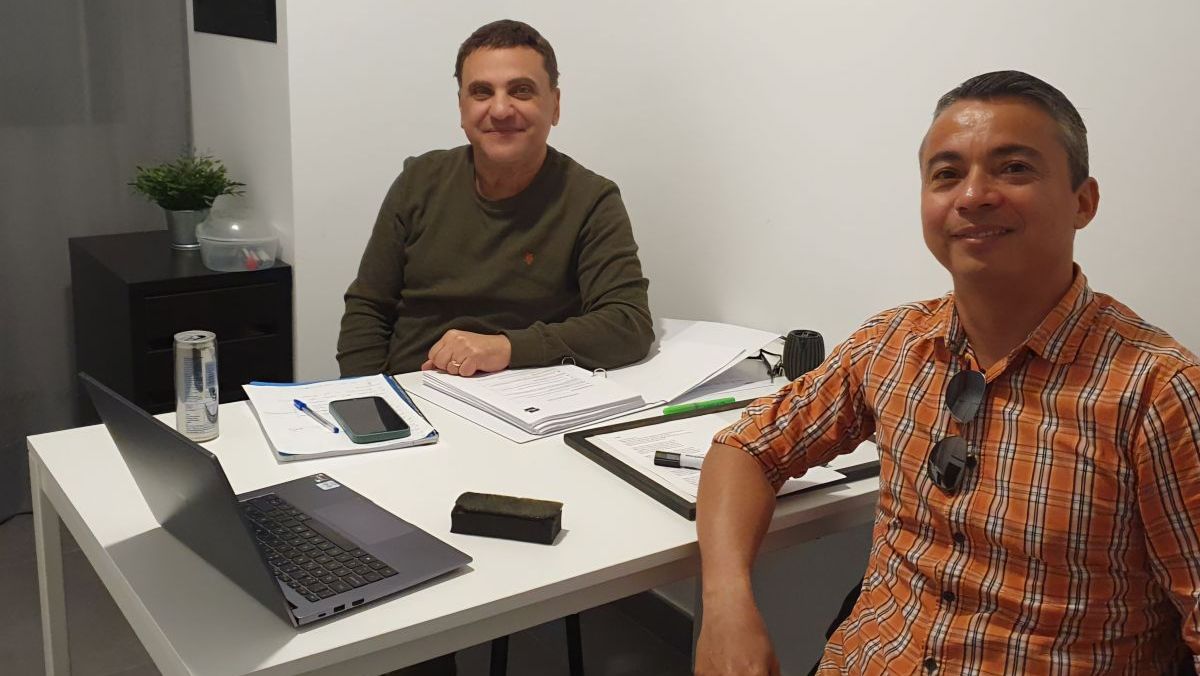
Spanish for the situations you encounter
Participants come to Miami with very different objectives.
Some want practical Spanish for daily life in the United States. Others communicate with Spanish-speaking clients or employees. Heritage speakers may converse comfortably with family but need greater accuracy in professional writing. Executives may require Spanish for several Latin American markets.
Your curriculum begins with those real circumstances.
It can develop:
- Practical conversation
- Listening across different accents
- Grammar and accuracy
- Pronunciation
- Reading and writing
- Spanish used in the United States
- Professional terminology
- Executive communication
- Cultural awareness
- Flexible international vocabulary
Your level is evaluated using the Common European Framework of Reference for Languages (CEFR), while the actual learning plan reflects your personal language profile.
Spanish Immersion for Lifelong Learners
The Lifelong Learners curriculum is designed for adults who want Spanish for travel, family relationships, cultural interest or the satisfaction of learning something meaningful.
Miami offers immediate opportunities to recognize and use what you study. You can hear Spanish over breakfast, read it on signs, encounter it in cultural institutions and practise it during ordinary interactions.
Everyday Spanish in a bilingual city
Your curriculum may prepare you to:
- Introduce yourself
- Participate in social conversations
- Discuss family and personal interests
- Communicate in cafés and restaurants
- Understand menus and ingredients
- Shop and ask about products
- Use taxis and public transportation
- Request directions
- Make appointments and reservations
- Describe people and places
- Talk about previous experiences
- Discuss travel and future plans
- Express preferences and opinions
- Understand common Latin American expressions
- Follow Spanish spoken at different speeds
- Read practical and cultural information
- Write messages with greater confidence
Discovering Miami’s Spanish-speaking cultures
Language classes can incorporate subjects such as:
- Cuban-American history
- Caribbean migration
- Latin American communities in Miami
- Spanish-language radio, television and journalism
- Music and dance
- Art and architecture
- Literature and film
- Food traditions
- Bilingual identity
- The development of Miami
- Connections between the United States and Latin America
Because Miami represents many cultures, the curriculum can emphasize comparison rather than presenting one national perspective as universal.
Spanish Immersion for Professionals
This program is intended for professionals who communicate with Spanish-speaking clients, patients, students, colleagues or members of the public in the United States.
Your course can address the communication you encounter every day or prepare you for responsibilities that will require Spanish in the future.
Spanish for serving and collaborating
Depending on your occupation, lessons may include:
- Explaining your professional role
- Welcoming clients, patients or visitors
- Asking clear and respectful questions
- Gathering and confirming information
- Explaining procedures
- Giving instructions
- Making recommendations
- Scheduling appointments
- Conducting telephone conversations
- Participating in meetings
- Writing professional emails and messages
- Presenting services or projects
- Responding to concerns
- De-escalating misunderstandings
- Using formal and informal language appropriately
- Communicating through an interpreter when necessary
- Recognizing vocabulary differences among nationalities
Professional fields
Specialized content can be created for:
- Healthcare
- Education
- Law and legal services
- Government and public administration
- Social work
- Real estate
- Banking and finance
- Tourism and hospitality
- Construction
- Retail
- Nonprofit organizations
- Media and communications
You may bring nonconfidential forms, correspondence, scripts, presentations or terminology. Your instructor can use them to create realistic conversations and written exercises.
The purpose is not to replace a qualified interpreter in situations where one is legally or professionally required. It is to improve your ability to communicate directly, appropriately and confidently.
Spanish Immersion for Business Executives
Miami is a natural setting for executives whose responsibilities connect the United States with Latin America and the Caribbean.
Your private curriculum can concentrate on one market or help you communicate across several countries. Particular attention can be given to vocabulary that varies regionally and to selecting language that a diverse audience will understand.
Executive communication across markets
Your course may prepare you to:
- Present your company and professional background
- Explain products and services
- Discuss markets and business models
- Communicate strategic objectives
- Lead multilingual meetings
- Deliver presentations
- Respond to questions without a script
- Discuss financial performance
- Explain projections
- Negotiate terms and agreements
- Evaluate proposals
- Manage international projects
- Communicate deadlines and responsibilities
- Give feedback
- Resolve disagreement diplomatically
- Network in Spanish
- Participate in professional social events
- Write executive correspondence
Cultural flexibility
A phrase that sounds natural in one country may sound unfamiliar, overly formal or inappropriate in another.
Executive classes can compare communication practices across Latin America and Spain, including differences in directness, hierarchy, negotiation and relationship-building.
The objective is to help you communicate effectively without assuming that all Spanish-speaking markets operate in the same way.
Spanish for heritage speakers
Miami is especially well suited to heritage speakers: people who grew up hearing or speaking Spanish at home but did not necessarily study it formally.
A heritage speaker may communicate naturally in conversation while having gaps in grammar, spelling, reading or professional vocabulary. Placing such a learner in a conventional beginner course would ignore their existing abilities.
Your individual curriculum may focus on:
- Expanding active vocabulary
- Improving grammatical accuracy
- Strengthening reading comprehension
- Developing formal writing
- Using written accents correctly
- Separating English and Spanish sentence patterns
- Reducing unnecessary Anglicisms
- Preparing professional correspondence
- Giving presentations
- Moving confidently between family and professional registers
- Understanding vocabulary beyond your family’s country of origin
The program builds on the Spanish you already possess rather than starting from zero.
Spanish across countries and communities
There is no single “Miami Spanish.” The city reflects a wide range of regional accents and vocabulary.
Your instructor can help you navigate:
- Caribbean pronunciation
- Cuban vocabulary and expressions
- Colombian and Venezuelan usage
- Mexican and Central American vocabulary
- Forms of address such as tú, usted and vos
- Words that change meaning between countries
- English influence on Spanish in the United States
- Formal Spanish for professional contexts
- Internationally understandable alternatives
- Strategies for following unfamiliar accents
You do not need to imitate every variety. The goal is to speak clearly, recognize important differences and adjust your language when necessary.
Creating an urban immersion in Miami
The Miami program uses the city itself as part of the learning environment.
The Miami immersion combines a residential base with concentrated private instruction and guided practice in selected real-life settings throughout the city.
Depending on your objectives, the schedule might include:
- Intensive morning classes followed by independent practice
- Lessons divided between classroom study and guided conversation
- Professional simulations based on your workplace
- Listening activities using Spanish-language media
- Cultural visits connected to Miami’s communities
- Meals selected for conversational practice
- Dedicated writing or presentation sessions
- Remote-work periods for professionals
- Individual review and feedback
Programs may last 2, 5 or 7 days, or several weeks.
According to the arrangement selected, your program may include private classes, accommodation at the Miami immersion residence, meals, cultural experiences, learning materials, transportation assistance and other personalized services.
Programs can also be prepared for couples, families, colleagues, executive teams and private groups.
Make Miami work for your Spanish
Miami is not a substitute for Mexico, Spain, Peru, Argentina or Colombia. It offers something different: the opportunity to experience how Spanish functions inside a multilingual American city connected to many parts of the Spanish-speaking world.
That makes it an especially strong choice for heritage learners, professionals serving diverse communities and executives working across international markets.
Tell Pedro where Spanish appears in your life and where you want it to take you next. Your proposal can then bring together the right instruction, schedule, accommodation and cultural experiences—without forcing your goals into a conventional course.
Request your personalized proposal, or contact Pedro directly at pedro@anderslanguages.com .
Frequently asked questions
Can Miami really provide a Spanish immersion experience?
Yes, provided the program is designed intentionally. Spanish is widely used across Miami, but simply visiting the city does not guarantee meaningful practice. Private instruction, guided activities and specific communication goals turn the bilingual environment into an immersion experience.
Is this program only for people who already live in the United States?
No. It is suitable for US residents and international participants. Miami can be especially practical for learners who want broad exposure to Latin American Spanish without travelling outside the United States.
Is the program appropriate for heritage speakers?
Yes. Heritage speakers receive an individual assessment rather than being automatically classified as beginners. Their curriculum can concentrate on grammar, vocabulary, reading, writing and professional Spanish.
Which variety of Spanish will I learn?
You will develop clear, internationally useful Spanish while learning to understand vocabulary and accents from several countries. The emphasis can be adjusted if you communicate primarily with one particular community.
Can classes focus on Spanish used in a US workplace?
Yes. We can base the curriculum on communication with employees, clients, patients, students or members of the public in the United States.
Can I study Spanish for healthcare or legal work?
Yes, but the course teaches language and communication; it does not provide professional certification or replace qualified interpreters where regulations or professional standards require them.
Is accommodation included?
Yes. Accommodation at the Miami immersion residence is included according to the program and room category selected. Your classes and accommodation are provided under one roof, while selected meals and activities take place elsewhere in Miami.
Can I combine classes with business commitments?
Yes. Private instruction allows the timetable to be planned around meetings, conferences or remote work. Share your fixed obligations when requesting a proposal.
Are complete beginners welcome?
Yes. Beginners begin with pronunciation, essential vocabulary and practical sentence construction. The diverse Spanish heard in Miami is introduced gradually rather than all at once.