Pedro and Gina’s guide to eating well in Cusco
Cusco’s food reflects its Andean setting: potatoes, corn, beans and aromatic herbs appear alongside dishes brought from across Peru. A market lunch, a neighborhood menú and a considered restaurant dinner each offer a different way to discover the city.
Use this guide as a starting point and ask our local team what is especially good during your stay. Ordering a new dish is also a chance to practice Spanish during your Spanish immersion in Peru.
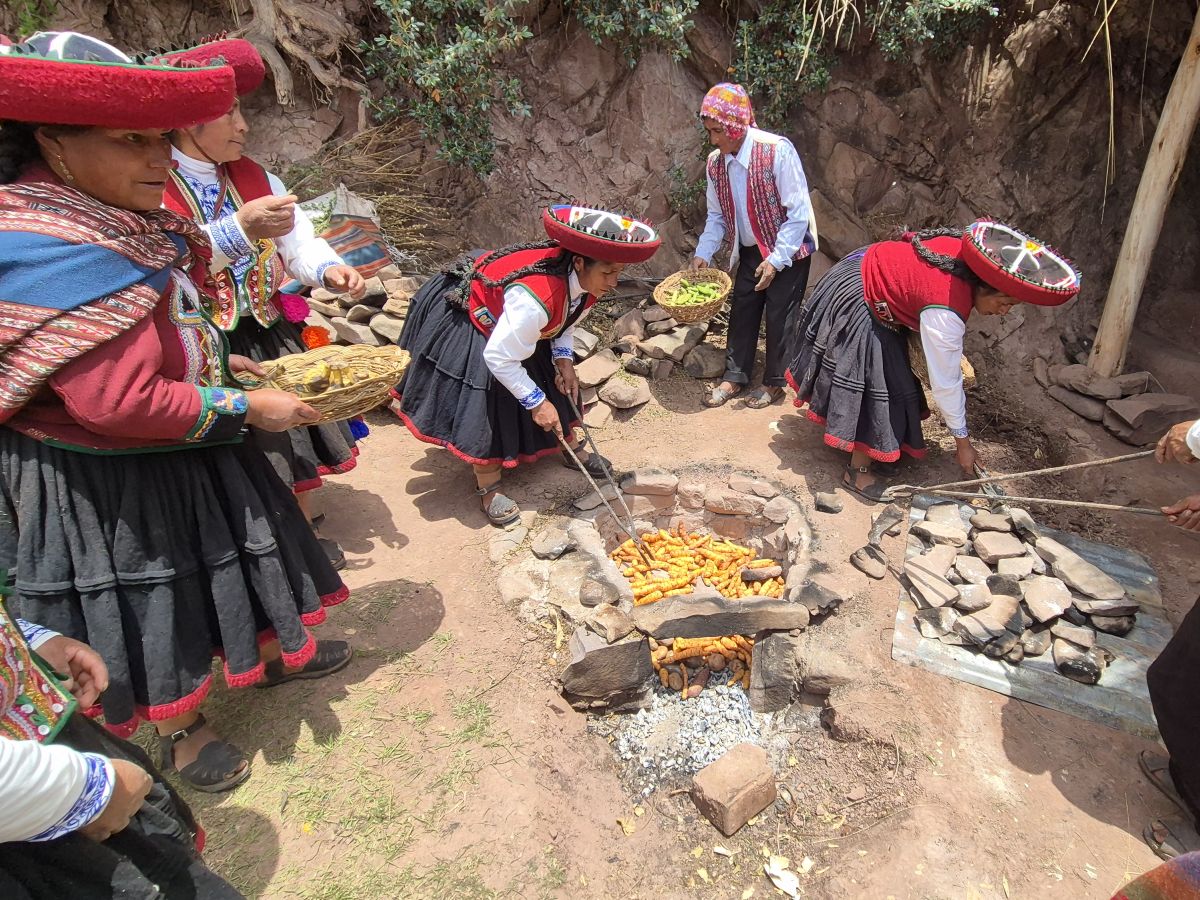
Cooking cuy in a pachamanca: sharing a traditional Andean culinary experience with our guests and Spanish instructors
At a busy stall, look for dishes prepared in front of you and served hot. These are a few ways to begin exploring Cusco’s flavors:
Grilled skewers, commonly made with beef heart and served with potato and a spicy sauce. Ask about ingredients if you have dietary restrictions.
Large-kernel Andean corn with fresh cheese, a simple snack sold at markets and stalls.
Pork cooked until crisp, often served with potatoes or corn. Look for a freshly prepared portion.
Fillings and styles vary. Ask “¿Qué lleva?” to find out what is inside, and choose a warm snack from a busy bakery.
Choose fruit you can peel yourself or fruit prepared with safe water and clean utensils.
Cusco’s main food market, near the historic center, brings together produce vendors and food counters. Look for a freshly prepared soup or a hot lunch, and take time to notice the varieties of corn, potatoes and herbs.
Greet the vendor, ask the price before ordering and carry small denominations of soles. Some stalls accept cash only.
Seasonal produce, Andean grains, local breads and herbs offer an introduction to ingredients you may encounter at dinner.
Many modest restaurants serve a set lunch with a soup or starter and a main dish. Ask what is included and whether drinks are extra.
Look for soups featuring corn, potatoes, beans or quinoa. A warm bowl can be especially welcome on a cool Cusco evening.
A traditional dish made with broad beans, cheese and Andean herbs; recipes vary from kitchen to kitchen.
Chiri uchu is closely associated with Cusco’s Corpus Christi celebrations. Ask locally when and where it is prepared rather than expecting it on every menu.
Some chefs build menus around native potatoes, local grains, herbs and seasonal produce. Ask about tasting menus if you want to see several ingredients in one meal.
The historic center and San Blas offer intimate restaurants in distinctive settings. Reserve ahead for a special evening and check the exact location: Cusco’s streets and steps can be steep.
You will also find interpretations of broader Peruvian cuisine. Ask what the kitchen considers its specialty and whether a dish is prepared with locally sourced ingredients.
Menus and prices change. Check current prices, drinks and any service charge before booking.
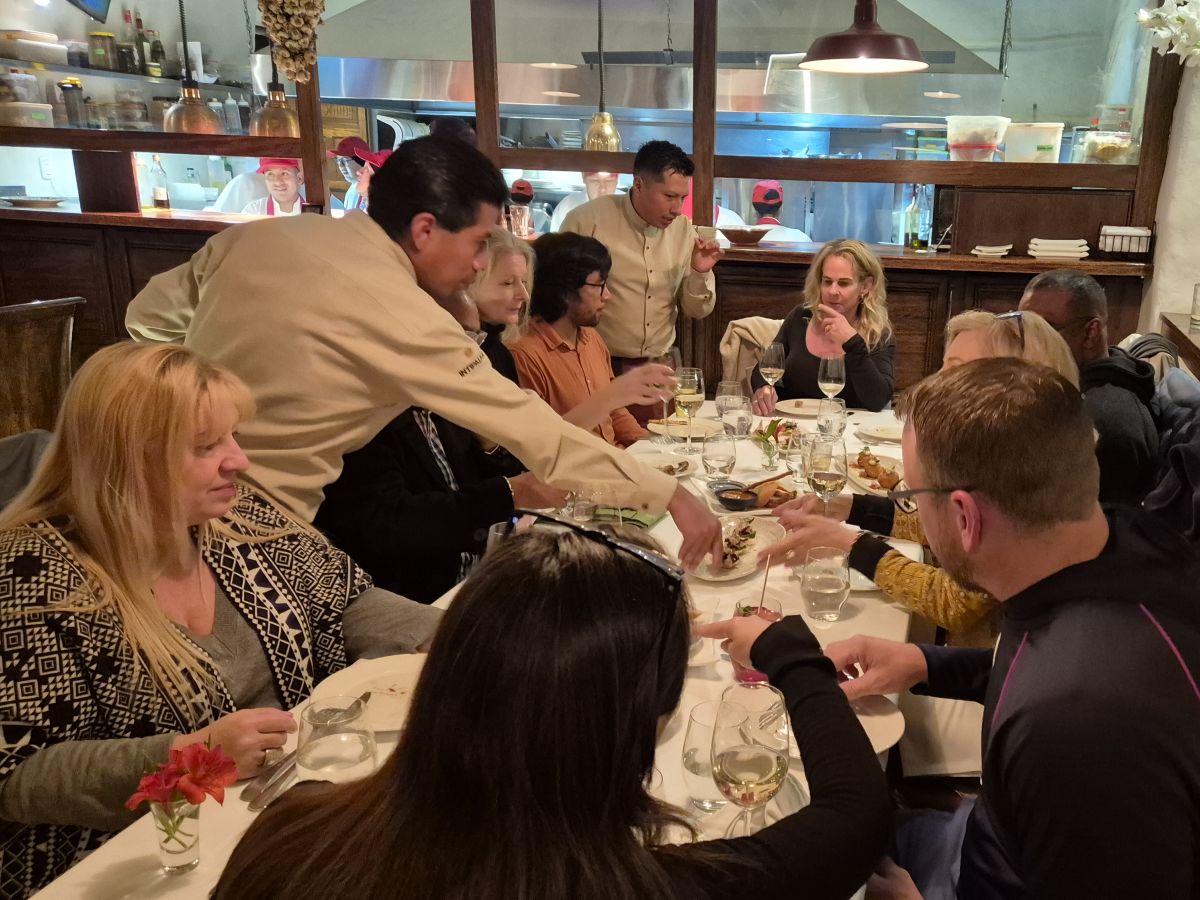
Welcome dinner at Anders Languages Luxury Spanish Immersion in Cusco: contemporary cuisine showcasing Andean ingredients.
“¿Qué me recomienda?” What do you recommend?
“¿Qué lleva este plato?” What is in this dish? Useful for ingredients and allergies.
“Sin ají, por favor.” Without chili pepper, please.
“La cuenta, por favor.” The bill, please.
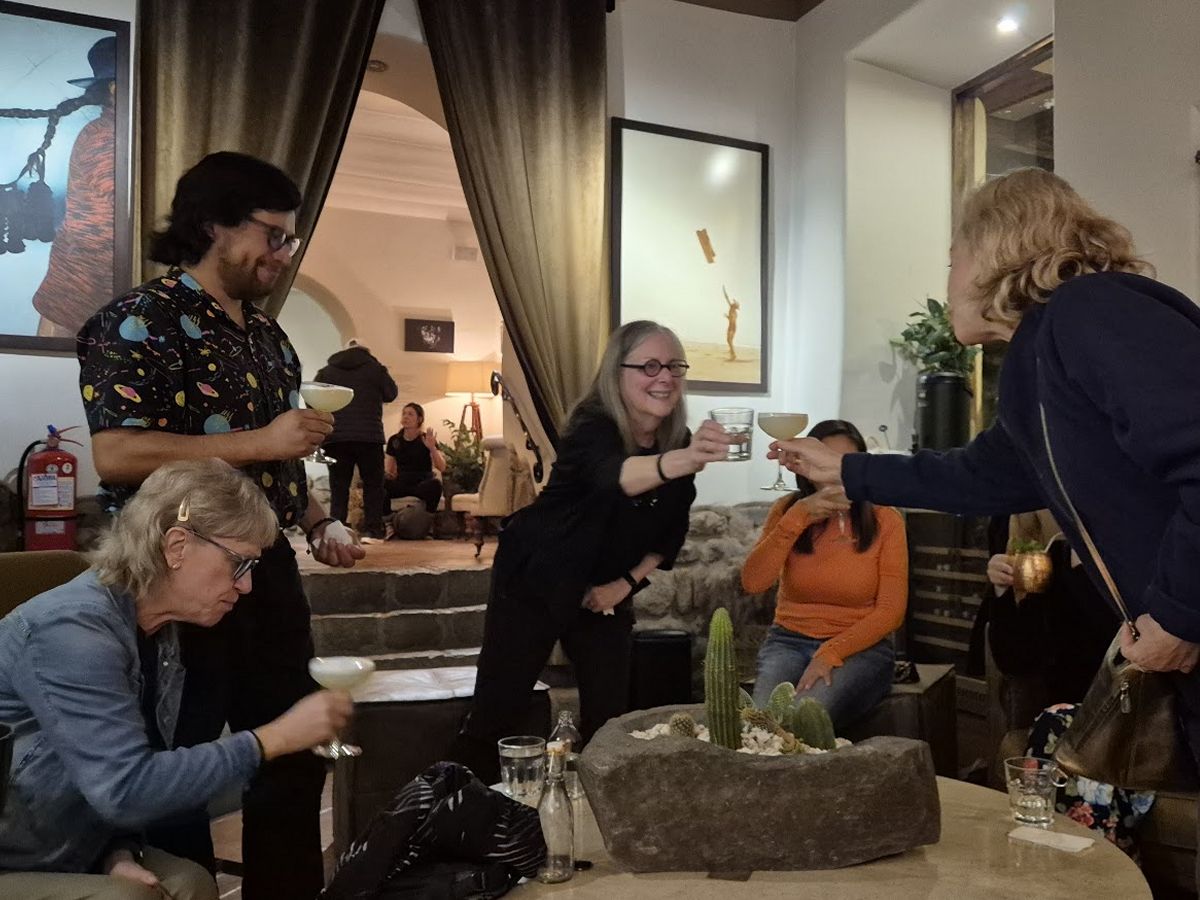
A pisco aperitif before dinner: a taste of Peru during an Anders Languages luxury Spanish immersion in Cusco.
Spend an afternoon in a café and ask about the beans or brewing method. It is an easy setting for a little conversational Spanish.
A nonalcoholic drink made from purple corn, often flavored with fruit and spices. Ask if it is made with safe drinking water.
A traditional fermented corn drink. Try it at a reputable venue if you are curious about local food traditions; its preparation and alcohol content can vary.
Peru’s pisco appears in cocktails across the city. Go easy during your first days in Cusco while acclimatizing.
Choose busy stalls where food is prepared hygienically and served hot. Use safe drinking water and follow your own dietary or medical precautions.
Try a bowl of Andean soup, kapchi de habas, freshly cooked corn and potatoes, or chicharrón. Chiri uchu is associated with Corpus Christi celebrations; availability varies by season.
Prices vary by location and season. Market meals are generally less expensive than full-service restaurants; check current menus, any service charge and whether your program includes meals.
Continue planning your Spanish immersion in Cusco and your travels in Peru.

I’m Pedro, and I’ll personally take care of your inquiry.
No two learners are alike, so every Spanish immersion experience we create is designed specifically for you.
Complete the form, and I’ll get right to work. You can also reach me directly by email or WhatsApp.